


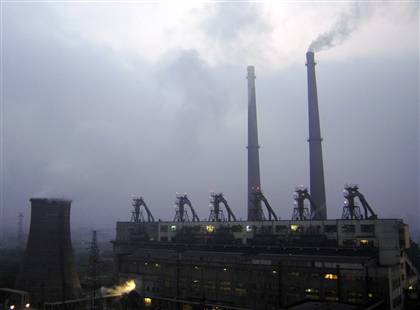
A report from Harvard researchers in this month's Annals of the New York Academy of Sciences will reveal that coal use costs the U.S. between a third and over half a trillion dollars each year in health, economic, and environmental impacts.
Coal is the most popular electricity-generating fuel, with 40% of electricity worldwide generated by coal plants. It's a number that is only expected to grow; by 2030, electricity demand around the world will double. But while coal is cheap and abundant, it has plenty of hidden costs.
The report, written by Dr. Paul Epstein, associate director of the Center for Health and the Global Environment at Harvard Medical School, examines the life cycle of coal production to find "hidden costs," or costs that occur "when the activity of one agent affects the well-being of another agent outside of any type of market mechanism."
These costs include damages from climate change, like weather events and rising seas, public health damages from toxins released during electricity generation, public health problems in coal-mining regions, government subsidies and lost value of abandoned mine areas.
In Appalachian communities alone, public health burdens from coal mining cost $74.6 billion each year. Air pollutant emissions cost $187.5 billion, mercury emission impacts reach $29.3 billion and greenhouse gas emissions (and accompanying climate change effects) from coal-fired plants costs between $61.7 and $205.8 billion. And then there are smaller costs—between $2.2 and $10 billion in impacts from land disturbances, impacts from toxic spills, declines in property values and crop damage.
The paper isn't too bullish on carbon capture and storage at coal plants, either, explaining that "in addition to the control technique not altering the upstream life cycle cost—significant obstacles lie in the way, including the costs of construction of suitable plants and underground storage facilities."